Long before we started making maple syrup at the farm (or before we even owned the farm) – our good friends Dan and Jackie told us stories of this incredible maple syrup shack that Jackie’s dad, Scott, worked at every year. The general gist was that each year Scott, his friend John, and a few others, would spend weeks harvesting sap and boiling it down on a custom evaporator that could eat sap at a tremendous rate. Dan and Jackie talked of all of the custom evaporator pieces that did different things to make the process more efficient and how they could evaporate up to 40 gallons an hour. My imagination went quickly to something the size of a steam locomotive that could devour sap more quickly than it could be harvested. Finally, after years of hearing the stories, we finally made it out to John’s sugar shack. Needless to say – the stories were all true (save the piece about it being the size of a steam locomotive).
We went to the sugar shack toward the end of syruping season, in early April. When we arrived, I’ll admit, I was surprised at the location. Each time we talked about the sugar shack, Dan and Jackie had mentioned it was on a piece of property John owned, that used to be part of an old camp of some sorts. The property had a ton of mature maple trees and was on a lake. Though I had always imagined the shack was out in the country somewhere away from the cities, I was more than surprised to learn it was actually in Eden Prairie – a large suburb of the Twin Cities. When we arrived we found the property was more than unique. It was a beautiful piece of land on a lake right within Eden Prairie itself. While giving us a tour John later shared that when he bought the land it was “in the middle of nowhere” surrounded by fields. A story that I think is perhaps familiar to many, as urban sprawl continues at a rapid pace.
My main interest in visiting was to see their process. A lesson I continue to learn over and over again – I can read as many books as I want and do as much research as I can – but nothing beats talking with folks who are actually doing what you want to do. As this was our second year making maple syrup and we had run into some challenges (mostly around scale), I was anxious to learn what their process was and how they had tackled some of the problems we were facing at the farm.
When we arrived we were greeted by John, Scott, and some of their friends. John and his friends graciously spent time telling us all the history of their maple syrup making. John had started many years ago with large pans over cinder blocks and slowly over time refined the process and means of evaporation. As time went on and the operation scaled up more folks heard about the operation and got involved including Scott. What they created is truly a one of a kind setup. The pans are from Smoky Lake (the same Wisconsin-based business we buy our syruping equipment from) but the arch (fire box) setup was custom made by John and his friends.
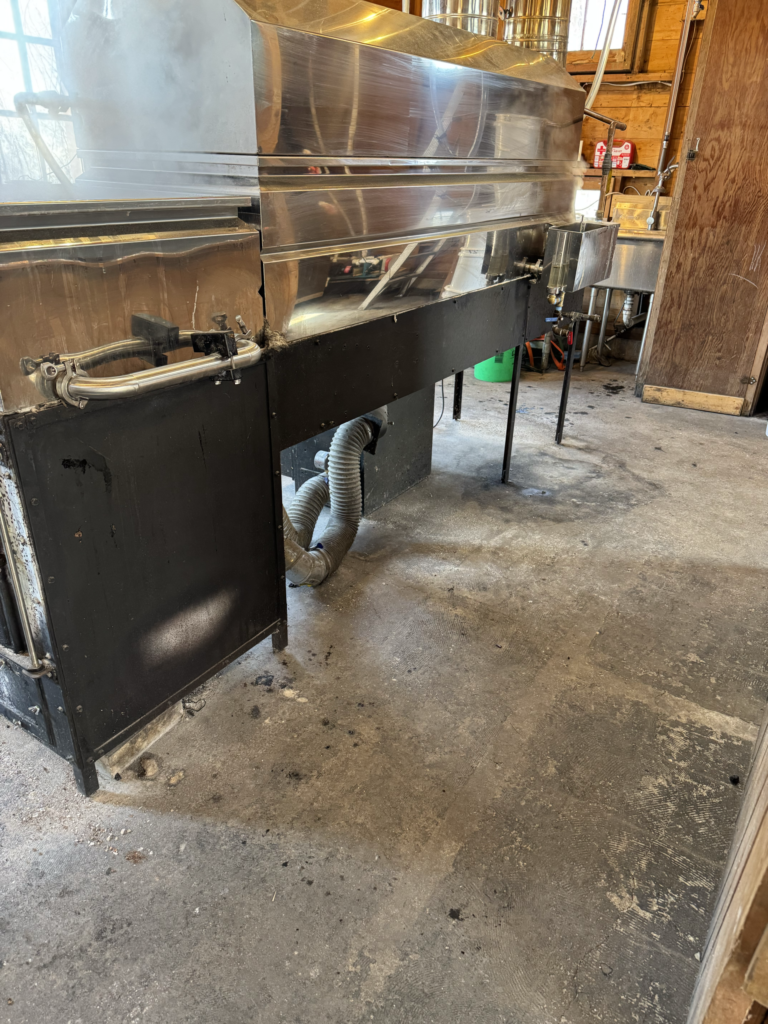
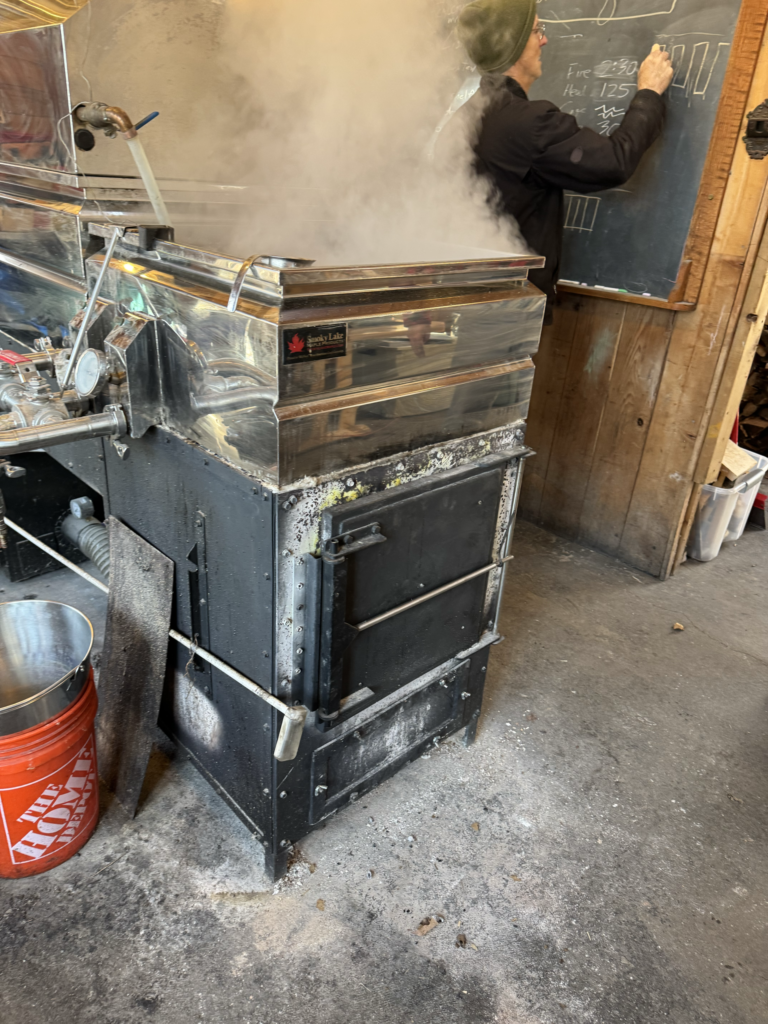
The sugar shack is in a building that was once a bunk house for the camp. It’s a large building – maybe the size of a 2-car garage and the majority of it is dominated with the evaporator. The rest of the space included a space for cleaning up and storing equipment, a limited amount of seating, and a small area to house split wood to feed the evaporator.
Their setup consists of what I would call a “full pan set”. There’s a back flue pan where the bulk of the evaporation happens and a front finishing pan, or syrup pan, where the syrup finishes.
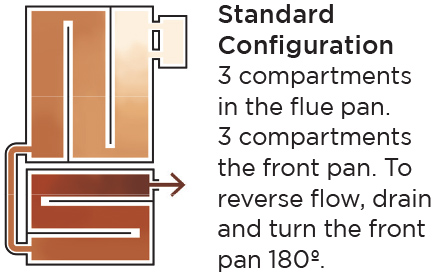
This is a much different setup than what we have at the farm. We’ve been boiling all of our syrup in a flat pan. The flat pan can be thought of as basically a large pot. As the sap evaporates we add more sap but you aren’t pulling off any finished syrup until you’re done boiling for the day. With a “full pan set” (or even a hybrid pan set) you are relying on syrup density to allow the denser finished sap/syrup to reach the end where you can draw it off. This works because you are constantly adding less dense, fresh sap to the flue pan which pushes the more dense, finished syrup toward the end at the front pan.
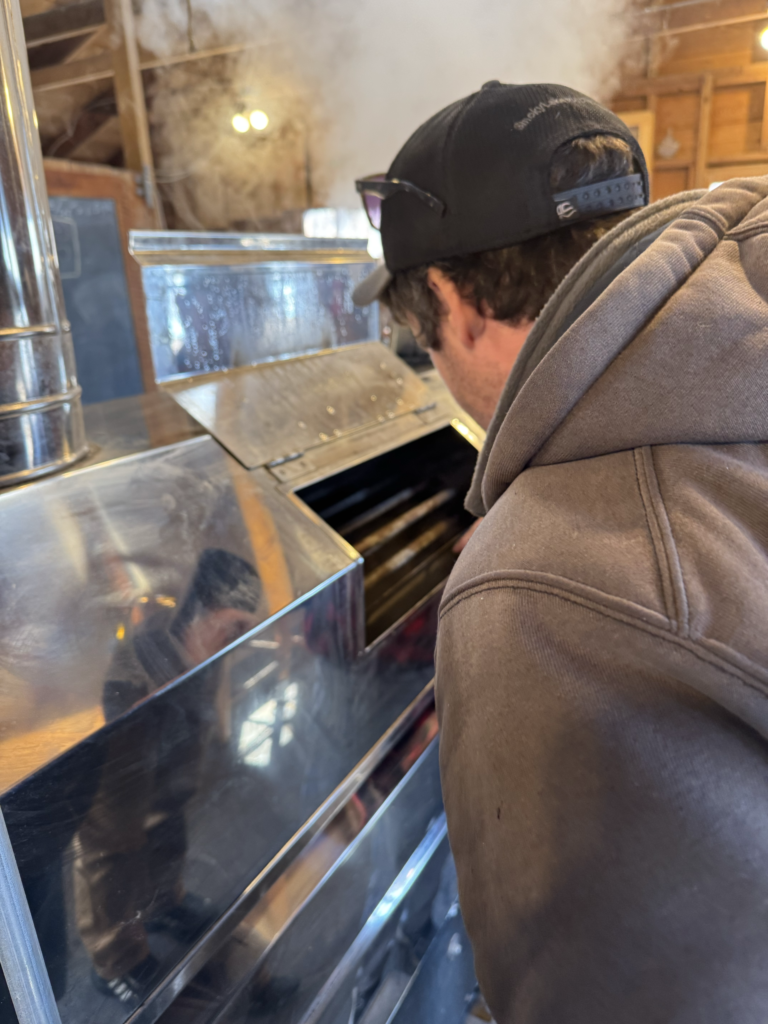
This kind of setup is far more efficient than the flat pan we’ve been using – but it also requires a lot more hands-on attention. John and Scott explained to us that once things got moving and you were drawing off finished syrup that you really had to have someone closely monitoring the system at all times. In addition to the difference in pan sets they also had a system to preheat the sap. The sap was being run through a series of pipes, contained within the hood over the flue pan. Steam coming off the flue pan was warming the sap, preheating it prior to being fed into the flue pan…
In addition, the fire box had a blower which blew fresh air into the combustion chamber which greatly increased the heat in the fire box….
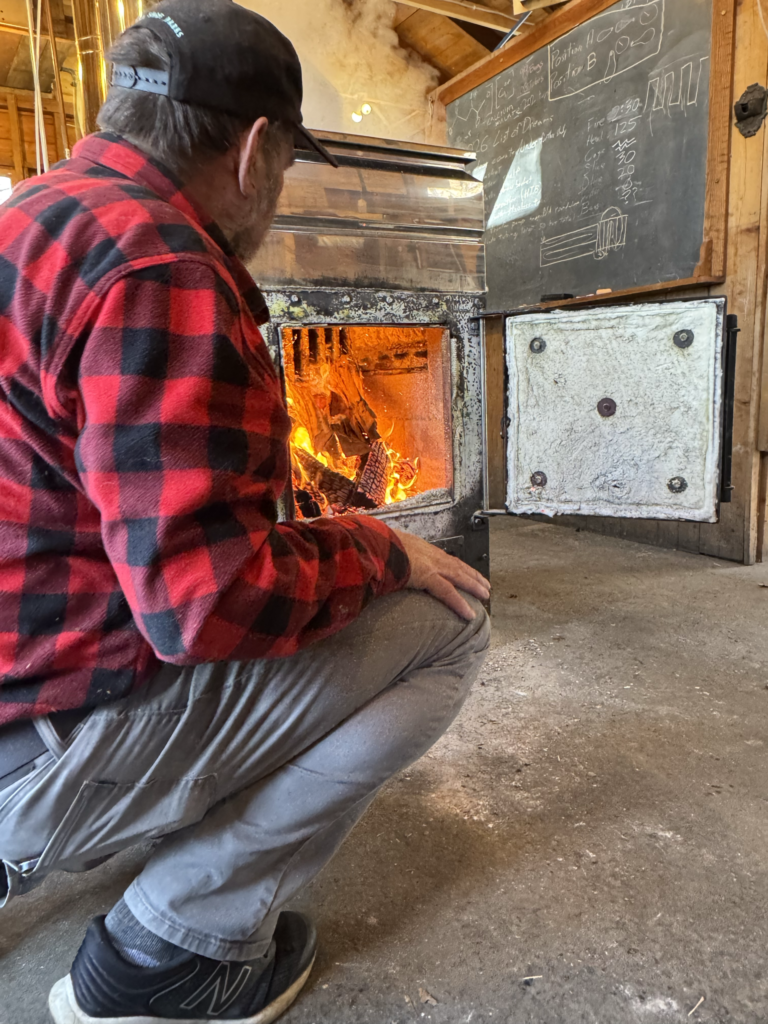
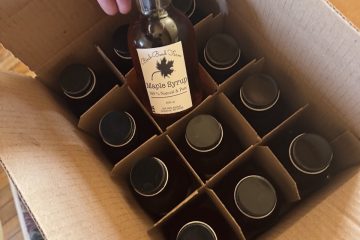
We are grateful that John and Scott were so willing to spend time answering questions, explaining things to us, and telling us the history of how they got to where they are now. The whole experience was awesome, inspiring Laura and I to step up our own maple syrup game at the farm. At the end of the day, we left with a couple of bottles of amazing maple syrup and lots of ideas for how we can scale up our own maple syrup production. A big thanks to Scott and John for their hospitality and willingness to spend time teaching us all about you process! We have a dedicated sugar shack in our plans for 2026 now!


1 Comment
Maple Syrup 2026 – Birch Bend Farm · May 21, 2026 at 11:17 pm
[…] awesome to talk to and super knowledgeable) about what our next steps should be. This, coupled with our visit to a friends sugar shack, sealed the deal on our next steps. I’m happy to announce that in 2026 we will be scaling up […]